

Generative Engine Optimization in Jordan
Search is changing fast — not because “SEO is dead”, but because the way people discover answers is shifting from blue links to AI-generated summaries, citations, and multi-source responses. If you want your brand to show up when people ask AI tools questions, you need a strategy that goes beyond traditional keyword targeting.
This guide explains Generative Engine Optimization for Jordanian businesses — how to structure content so it can be selected, summarized, and cited by modern AI search experiences (not just ranked in classic SERPs).
If you’re new to how Dot Media approaches growth as a connected system (strategy → execution → tracking → optimization), start with the main site and service overview: Dot Media (Home) and Digital Marketing Services in Jordan.

What Generative Engine Optimization (GEO) Means for Jordan
Generative Engine Optimization (often shortened as GEO) is the process of shaping your content so AI-driven search experiences can confidently extract it, verify it, and cite it as a reliable source. In practical terms, it’s not only about ranking #1 for a keyword — it’s about being used as part of the answer.
In 2026, many searches don’t end with a click. People read AI summaries, compare options, and make decisions from what AI shows them. That’s why geo in jordan is becoming a serious competitive advantage: the businesses that publish clear, trustworthy, and well-structured content are more likely to be included in AI answers.
For the official “how this works” perspective, Google explains AI search experiences for site owners here: AI features and your website (Google Search Central) . (This is a normal external link — follow by default unless your theme forces nofollow.)
Why This Matters Now (AI Search + Spam Policies)
Google’s direction is clear: helpful, original, people-first content wins — and mass-produced low-value pages lose. The same logic applies to AI answers: if your page is generic, paraphrased, or padded, it becomes less trustworthy to cite. This is especially important if you publish at scale, because “scaled content abuse” is a direct risk signal.
In other words: GEO doesn’t reward “more content”. It rewards better content — content that demonstrates real experience, real proof, and real clarity. That’s exactly where agencies with actual execution (SEO + ads + content + video + web) have an advantage over random AI blogs.
Internal resources on Dot Media you should connect to this article
- If your baseline SEO foundation isn’t strong, start here: SEO in Jordan (Dot Media)
- For paid acquisition + intent capture, connect GEO with SEM: Search Engine Marketing in Jordan
- For full-funnel campaigns and performance approach: Advertising Campaigns in Jordan
- When the reader is ready to talk implementation: Contact Dot Media
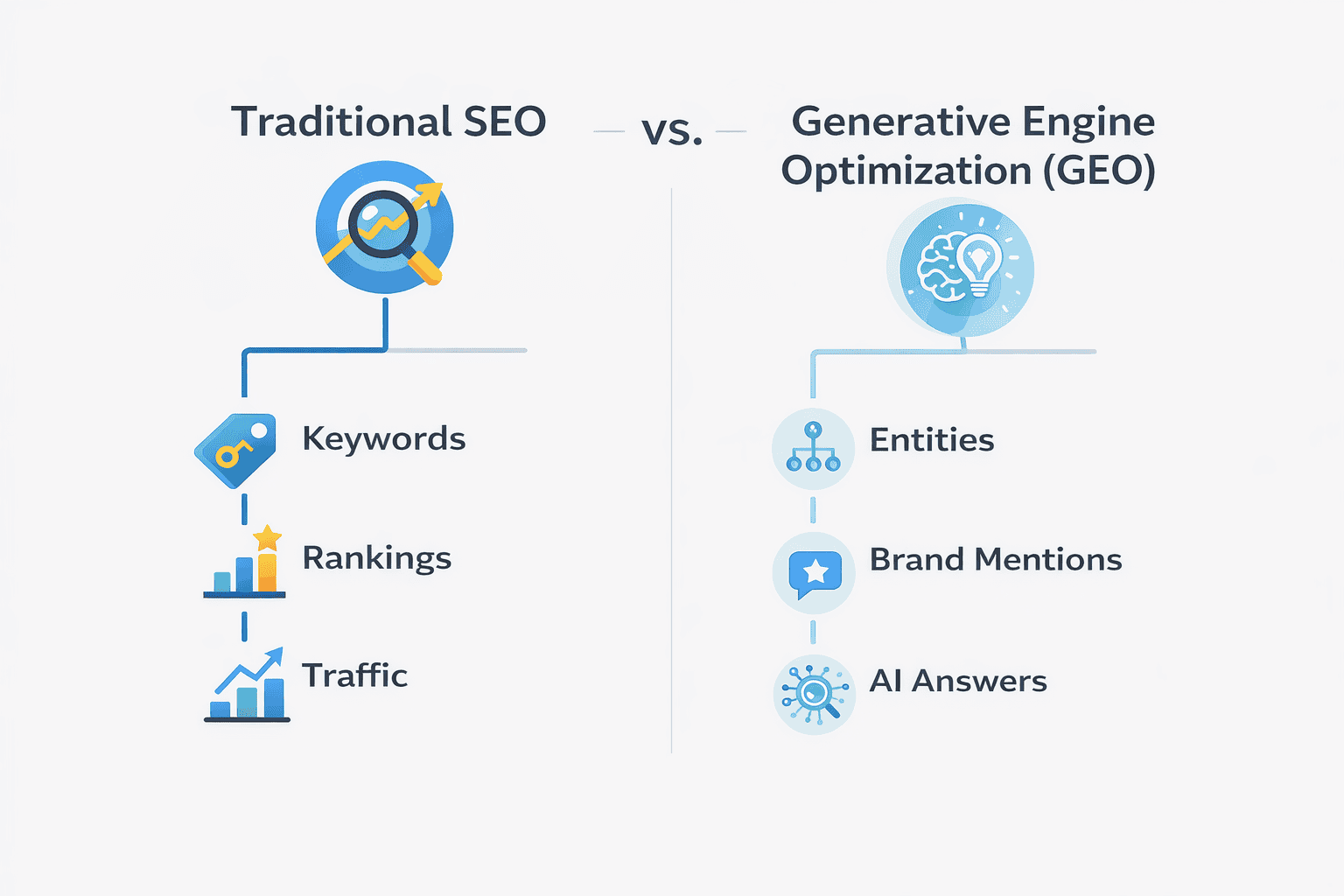
GEO vs Traditional SEO (The Real Difference)
Traditional SEO focuses heavily on matching search queries with pages. GEO focuses on making your brand and content easy for AI systems to understand, trust, and quote. You still need SEO — but GEO changes your priorities: clarity, structure, evidence, and entity signals.
If you only chase rankings, you might get traffic.
If you build GEO properly, you earn “source status” — being included in answers, summaries, and recommendations.
How AI Selects Sources (What You Need to Feed the Machine)
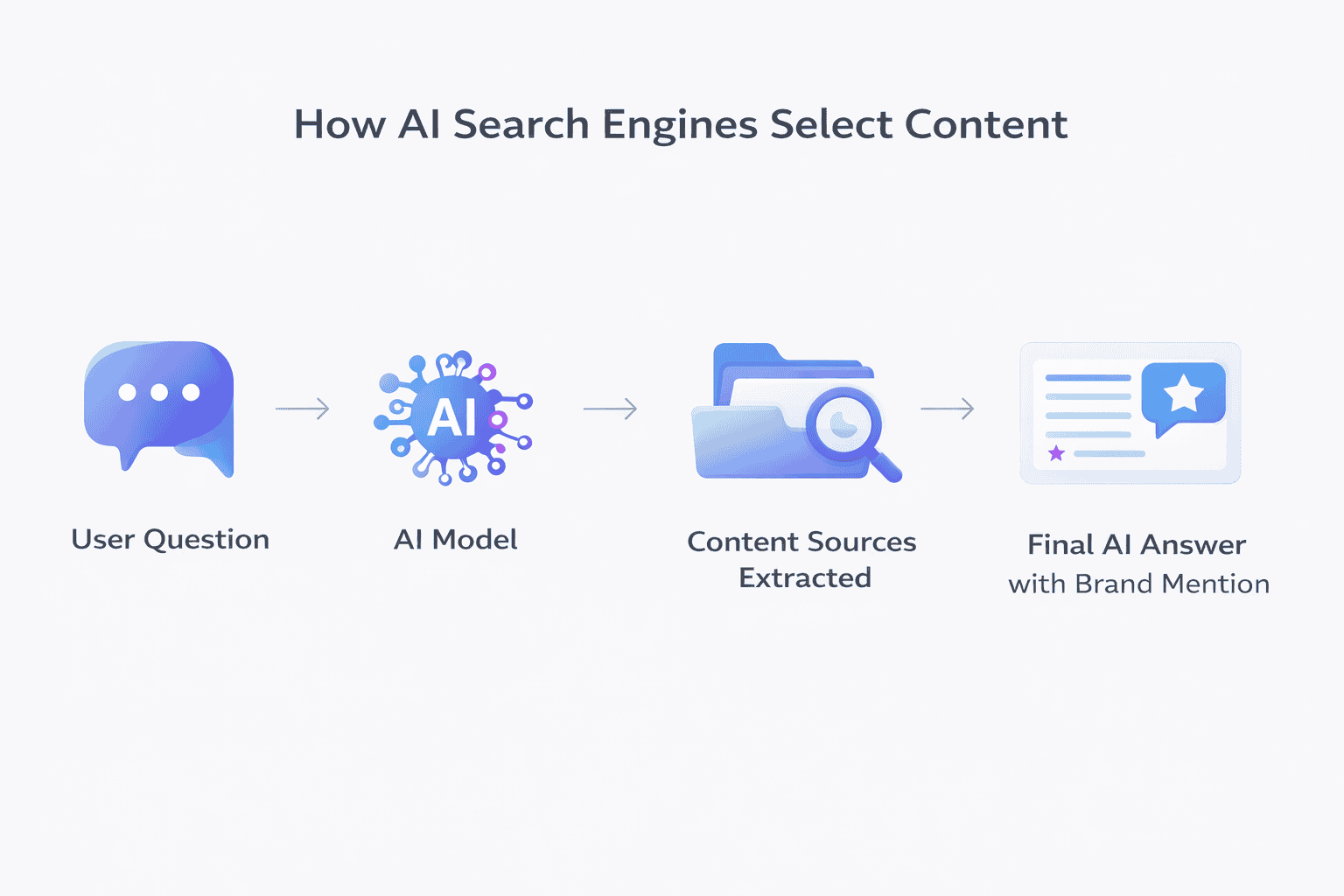
To be selected as a source, your content needs to be “extractable”: clean headings, direct answers, simple language, and proof points that can be verified. This is the same mindset behind Google Search Essentials: make it easy for systems to crawl, understand, and trust your page.
In the next section, we’ll break down the selection logic step-by-step and show exactly how to build pages that qualify for AI Overviews and AI Mode, including the content blocks, schema priorities, and the on-page structure that increases your chance of being cited.
How AI Overviews and AI Mode Choose Sources
In modern search, AI Overviews and AI Mode don’t “rank pages” the same way classic search does. Instead, they assemble answers by extracting supporting statements from multiple sources — then summarizing them. Your goal with Generative Engine Optimization is to make your content easy to extract, verify, and cite.
What AI systems typically prefer (the selection checklist)
- Direct answers within the first 1–2 paragraphs of each section (no long intros).
- Clear headings that map to questions people ask (What / How / Why / Best / Cost / Checklist).
- Evidence: examples, steps, frameworks, or measured outcomes (not opinion-only).
- Consistency: the same terms used naturally across the page (no keyword stuffing).
- Trust signals: author credibility, company details, contact clarity, and transparent claims.
Important: if your article is generic or mass-produced, it’s more likely to be ignored (or worse: flagged as scaled content abuse). GEO is about authority + proof, not volume.
The GEO Blueprint (Page-Level Optimization)
Here’s the practical blueprint you can apply to any service page or blog post if you want it to qualify for AI citations. This is the core of geo in jordan for businesses that want visibility beyond traditional SEO.
1) Build “extractable” sections
Every major heading should answer one clear intent. Then the first paragraph under that heading should contain: a direct definition, a direct recommendation, or a direct step-by-step outcome. Keep it simple enough that AI Overviews can quote it without losing meaning.
2) Use entity clarity (not just keywords)
Generative Engine Optimization works better when your content clearly signals: who you are, what you do, where you operate, and how you prove it. That means your brand should be described consistently across pages (Dot Media, services, location, contact details, and project context).
This is why GEO isn’t separate from your website structure — it depends on internal linking and entity consistency. For example, if someone lands here, they should easily move into your core service hub: Digital Marketing Services in Jordan and then into execution pages like Advertising Campaigns in Jordan.
3) Make your content “structured” like a reference
AI systems prefer content that feels like documentation: definitions, checklists, frameworks, and clear examples. This is aligned with the spirit of Google Search Essentials — make your pages easy to crawl and understand.
4) Avoid filler blocks and inflated paragraphs
Long intros, generic “marketing is important” paragraphs, or repeated statements reduce extractability. If a section can be written in 4–6 lines, do it. If you need depth, add depth through examples and steps — not padding. That’s how you avoid the “low value at scale” risk and the scaled content abuse problem.

Jordan-Specific GEO Strategy (What Works Locally)
To win in geo in jordan, you need a local relevance layer. Not just “Jordan” written on the page — but evidence that your business operates locally, understands the market, and has local proof.
Local relevance signals you should include
- Jordan/Amman context in examples (industries, buyer behavior, local campaign patterns).
- Internal links to relevant service pages that support conversion.
- Clear CTA paths (contact, proposal, audits, consultation).
- Local proof elements: projects, testimonials, case study snippets (even anonymized).
For example, if the reader is coming from paid traffic, connect GEO content with execution systems like SEM and funnels: Search Engine Marketing in Jordan and then into “how you build strategy”: Marketing Strategies in Jordan.
GEO is not “instead of” SEO — it’s the next layer
Traditional SEO still matters because it builds the foundation: indexability, technical quality, and relevance. GEO builds “answer eligibility” on top of it. If you want both, your baseline should be strong: SEO in Jordan.

How Dot Media Can Implement GEO (Execution, Not Theory)
Most businesses read about Generative Engine Optimization but fail at implementation because they treat it as “just another blog post.” In reality, GEO needs a connected system: content structure + internal links + service pages + tracking + conversion path.
Implementation steps (what we actually do)
- Content architecture: build a GEO pillar + supporting cluster pages.
- Internal linking map: connect each article to relevant service pages and conversion pages.
- Trust layer: author, organization clarity, projects, and contact accessibility.
- Structured sections: definitions, checklists, “how-to”, and FAQ formatting.
- Measurement: track assisted conversions, brand queries, and lead quality.
If you want this applied as a done-for-you system, start here: Contact Dot Media — and we’ll map the fastest path to earn AI citation visibility while keeping you aligned with Google Search Essentials.
FAQ: Generative Engine Optimization in Jordan
This FAQ section is written to match how people ask questions in AI search, and it’s structured so it can be extracted cleanly by AI Overviews and AI Mode.
What is Generative Engine Optimization?
Generative Engine Optimization is the process of optimizing your content so AI-driven search systems can confidently extract, summarize, and cite it as a reliable source — not only rank it in classic search results.
Does geo in jordan replace SEO?
No. geo in jordan does not replace SEO — it builds on it. SEO helps your pages get discovered and indexed, while GEO improves your chances of being used inside AI answers (summaries, citations, and recommendations).
How do AI Overviews choose which sources to cite?
AI Overviews typically favor content that is easy to extract (clear headings and direct answers), consistent, and supported by proof (examples, steps, frameworks, or verifiable information). Pages that look generic or padded are less likely to be cited.
What is AI Mode and how is it different from classic search?
AI Mode is a conversational search experience where users ask follow-up questions and receive synthesized answers. Unlike classic search that returns a list of links, AI Mode focuses on generating an answer — which makes “being selected as a source” more important than ranking alone.
What content format works best for Generative Engine Optimization in Jordan?
The strongest formats are: definition-first sections, step-by-step guides, checklists, comparison blocks, and practical FAQs. These formats increase extractability and help AI systems cite your content more confidently for Generative Engine Optimization in Jordan.
Can AI-generated content rank, or is it risky?
AI can be used as a tool, but publishing large volumes of low-value pages can trigger quality issues and risks like scaled content abuse. The safest approach is: human-led structure, real experience, original examples, and clear editing — so your content adds value beyond generic summaries.
What’s the minimum technical setup needed to support GEO?
At minimum: clean site structure, fast pages, clear internal links, and structured data for key sections (especially FAQ). This aligns with Google Search Essentials and improves how systems crawl, understand, and trust your content.