
The Hidden Cost of Cheap Marketing Services in 2026
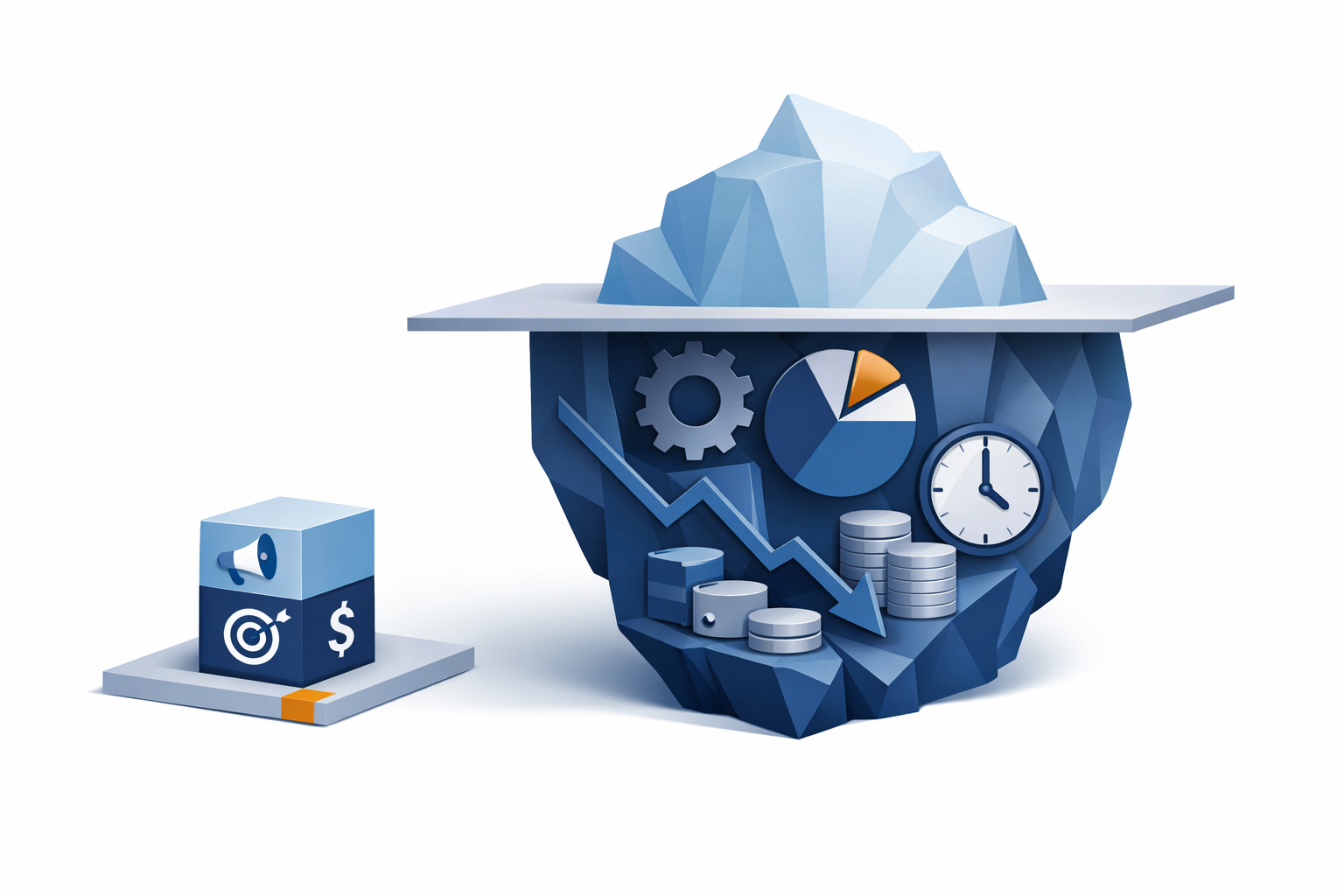
In 2026, the demand for cheap marketing services has reached an all-time high. Businesses are under pressure. Margins are tighter. Competition is more aggressive. Digital channels are noisier. On the surface, reducing marketing costs feels like a smart executive decision. Lower monthly retainers, discounted campaign packages, and bundled service offers appear financially responsible. But the reality is more complex. The true cost of cheap marketing services rarely appears in the invoice — it appears in declining marketing ROI, rising customer acquisition cost, unstable lifetime value, and long term revenue stagnation.
What makes this issue dangerous is that the damage unfolds gradually. In the first few months, activity looks normal. Ads run. Content is posted. Reports are sent. There are impressions, clicks, engagement metrics. However, without structured marketing systems, disciplined marketing budget allocation, and a defined marketing funnel strategy, the long term financial consequences compound quietly.
This article breaks down what businesses often overlook when choosing cheap marketing services in 2026, how weak digital marketing strategy foundations increase long term cost, and what decision-makers should evaluate before signing a low-cost contract.
Why Cheap Marketing Services Feel Like a Smart Decision
From a financial perspective, choosing cheap marketing services appears rational. A company compares two proposals. One is significantly lower in price. The deliverables seem similar on paper: ads management, social media posting, basic reporting. The instinct is simple — reduce expenses while maintaining output.
But marketing is not a commodity. It is a system. And systems cannot be evaluated only by monthly cost. They must be evaluated by structure, depth, measurement, and long term performance marketing strategy alignment.
In many cases, cheap marketing services focus heavily on execution while underinvesting in:
- Advanced attribution models
- Comprehensive marketing funnel strategy mapping
- Conversion optimization frameworks
- Long term content marketing strategy planning
- Retention and lifetime value development
Without these elements, marketing performance may look active but lacks depth. This is where the hidden cost begins.
The Long Term Cost Curve Most Businesses Don’t Calculate

Let’s break this down financially. Imagine a company chooses cheap marketing services and saves 40% on monthly fees. Initially, this seems efficient. However, weak targeting and incomplete marketing systems gradually increase cost per acquisition. Leads become inconsistent. Conversion optimization is minimal. Marketing KPIs focus on surface metrics instead of revenue.
Over a 12-month period, three financial effects typically emerge:
- Customer acquisition cost increases due to inefficient performance marketing strategy structure.
- Marketing ROI declines because campaigns are not tied to revenue-focused marketing budget allocation.
- Lifetime value stagnates due to weak retention systems and fragmented lead generation strategy processes.
The result? The long term revenue lost often exceeds the initial savings from cheap marketing services.
Execution Without Strategy: The Structural Gap
One of the most common structural weaknesses in cheap marketing services is the absence of an integrated digital marketing strategy. Campaigns are executed channel by channel rather than as a unified growth engine.
For example:
- Paid advertising strategy runs independently of content marketing strategy.
- Marketing funnel strategy is incomplete, leading to traffic drop-off between stages.
- Marketing spend analysis is reactive instead of predictive.
- Conversion optimization is limited to surface-level adjustments.
Without structured marketing systems, businesses operate in cycles of trial and error. Short term performance spikes are mistaken for sustainable growth. But when volatility increases, marketing budget allocation becomes unstable and reactive.
Marketing ROI Collapse: How It Happens Gradually

Marketing ROI rarely collapses overnight. It erodes slowly. When cheap marketing services lack advanced attribution models, businesses struggle to identify which channels truly drive revenue. Instead of optimizing strategically, they shift budget based on short term fluctuations.
Over time:
- Cost per acquisition increases unnoticed.
- Lead quality declines due to shallow targeting.
- Marketing KPIs become disconnected from revenue outcomes.
- Marketing budget allocation decisions become reactive.
This gradual erosion creates the illusion that “marketing is not working,” when in reality the system behind it was never engineered for long term efficiency.
Businesses evaluating providers should compare surface deliverables with comprehensive digital marketing services frameworks to understand the structural differences between tactical execution and strategic growth systems.
The Real Financial Risk: Rising Customer Acquisition Cost

One of the most dangerous long term consequences of cheap marketing services is the gradual increase in customer acquisition cost. In the early stages, campaigns may generate leads at acceptable levels. However, without continuous marketing spend analysis, deep audience refinement, and structured conversion optimization, inefficiencies begin to stack.
As targeting weakens and funnel gaps remain unresolved, cost per acquisition slowly rises. Businesses respond by increasing advertising budget instead of correcting the underlying marketing systems. This creates a cycle where spending grows but marketing ROI does not improve proportionally.
In structured performance marketing strategy environments, acquisition cost is actively monitored alongside lifetime value and revenue attribution. In cheap marketing services environments, acquisition is often measured in isolation — without connecting it to long term business growth strategy.
Weak Attribution Models and Incomplete Marketing Spend Analysis
Another hidden cost of cheap marketing services is the absence of advanced attribution models. When revenue impact cannot be traced accurately across channels, decision-making becomes speculative. Marketing budget allocation shifts based on assumptions rather than verified performance data.
Effective marketing spend analysis requires:
- Cross-channel tracking integration
- Revenue-linked marketing KPIs
- Multi-touch attribution models
- Continuous ROI tracking
Cheap marketing services often provide simplified reporting dashboards. While visually appealing, they may not reflect true marketing performance. Without structured measurement, businesses cannot identify long term inefficiencies early enough to prevent compounding financial impact.
The Retention Gap: Why Lifetime Value Stagnates
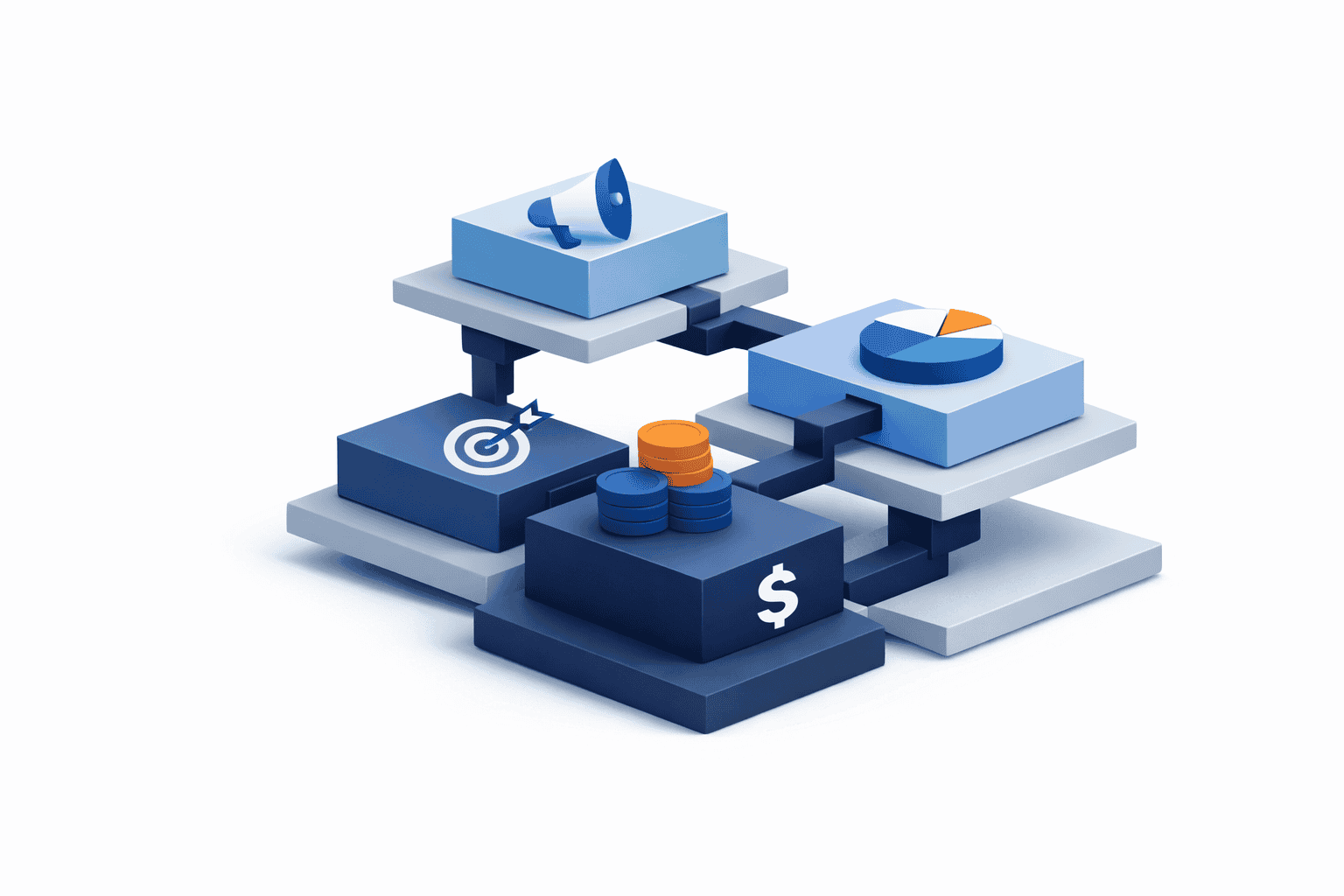
Many cheap marketing services focus heavily on acquisition while ignoring retention systems. Without structured lifecycle campaigns, email flows, remarketing sequences, and loyalty development, lifetime value remains flat.
When lifetime value does not increase, customer acquisition cost becomes more dangerous. The business must continuously generate new leads to sustain revenue. This increases pressure on marketing budget allocation and destabilizes long term financial planning.
In contrast, strong marketing systems integrate retention into the marketing funnel strategy. Acquisition and retention work together to improve marketing ROI over time instead of forcing constant new spend.
Why 2026 Makes Cheap Marketing Services Even Riskier
In 2026, digital ecosystems are more competitive and algorithm-driven than ever. AI-driven platforms reward precision, quality signals, and structured digital marketing strategy. Poorly structured campaigns become expensive quickly.
Cheap marketing services that lack:
- Data-backed performance marketing strategy
- Continuous conversion optimization testing
- Integrated content marketing strategy
- Revenue-focused marketing KPIs
…will struggle in an environment where efficiency is algorithmically measured. The margin for inefficiency has narrowed significantly. What may have worked in earlier years now exposes businesses to faster cost escalation.
For a deeper understanding of how structured strategy aligns with execution, reviewing the operational model of a digital marketing agency in Jordan can clarify how comprehensive systems differ from low-cost tactical setups.
Creating helpful, reliable, people-first contentFAQ: Cheap Marketing Services in 2026
What are the risks of cheap marketing services in 2026?
The risks of cheap marketing services in 2026 include rising customer acquisition cost, weak marketing funnel strategy, poor attribution models, unstable marketing ROI, and long term revenue stagnation.
How do cheap marketing services affect marketing ROI?
Cheap marketing services often focus on execution without structured marketing systems, which leads to inefficient marketing budget allocation, limited conversion optimization, and declining marketing ROI over time.
Can cheap marketing services work for small businesses?
Cheap marketing services may work temporarily for small businesses, but without integrated digital marketing strategy and proper marketing spend analysis, long term growth becomes difficult to sustain.
What is a better alternative to cheap marketing services?
A better alternative is investing in structured marketing systems that include performance marketing strategy, disciplined marketing budget allocation, advanced attribution models, conversion optimization, and continuous ROI tracking.