
marketing plan for small business in 2026: A Step-by-Step Guide
A marketing plan for small business owners is no longer a “nice to have” in 2026. With rising competition and higher acquisition costs across most channels, small businesses need a clear system that turns marketing activity into measurable outcomes.
This guide breaks down a practical marketing plan for small business growth: how to define goals, build targeting, choose the right channels, set budgets, and measure performance with a structured framework that scales.
What a marketing plan for small business should include
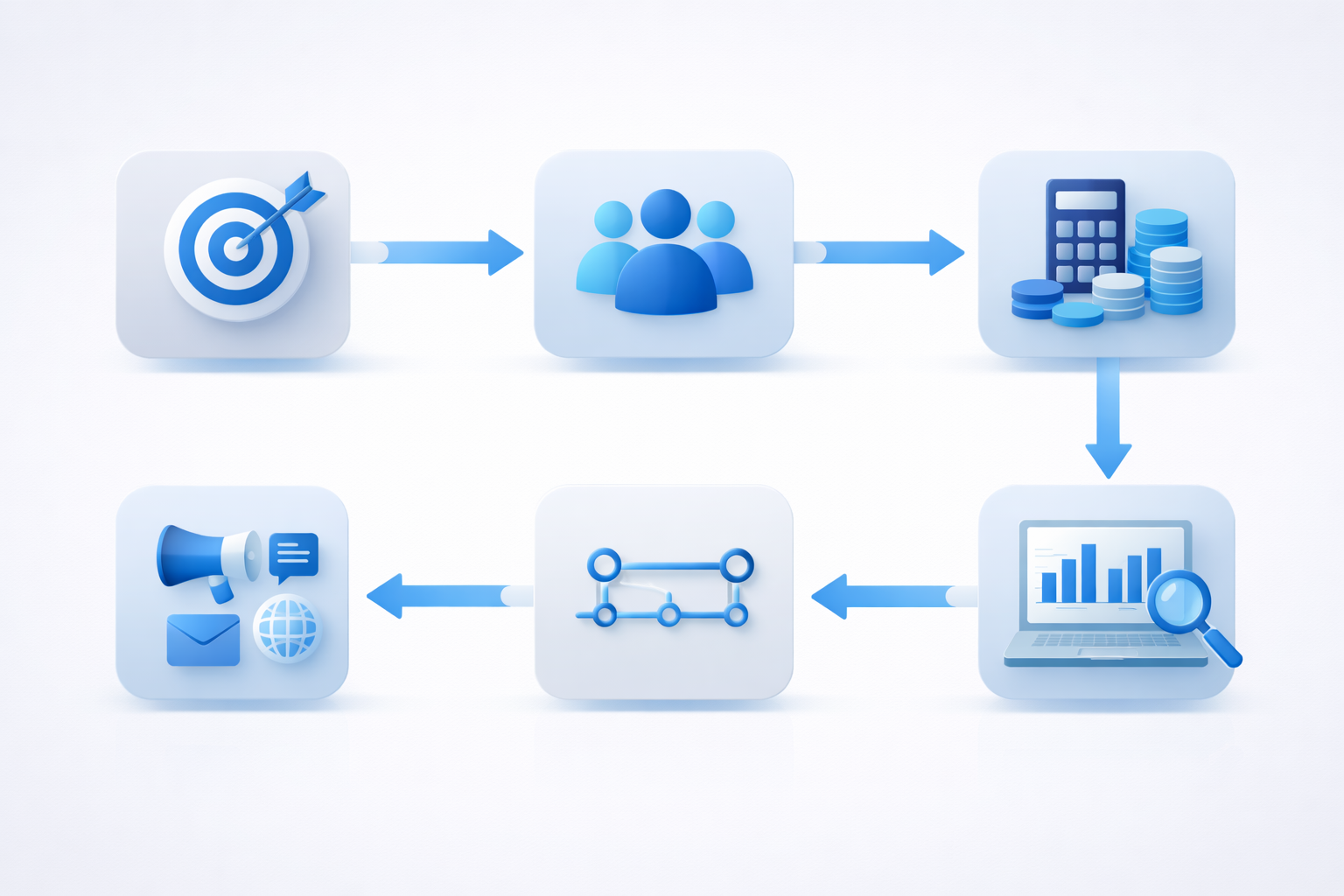
A strong marketing plan for small business owners typically includes: clear objectives, a defined audience, channel selection, a realistic budget, and a tracking system that connects marketing performance to business outcomes.
- Business goals and KPIs
- Target audience definition and customer persona
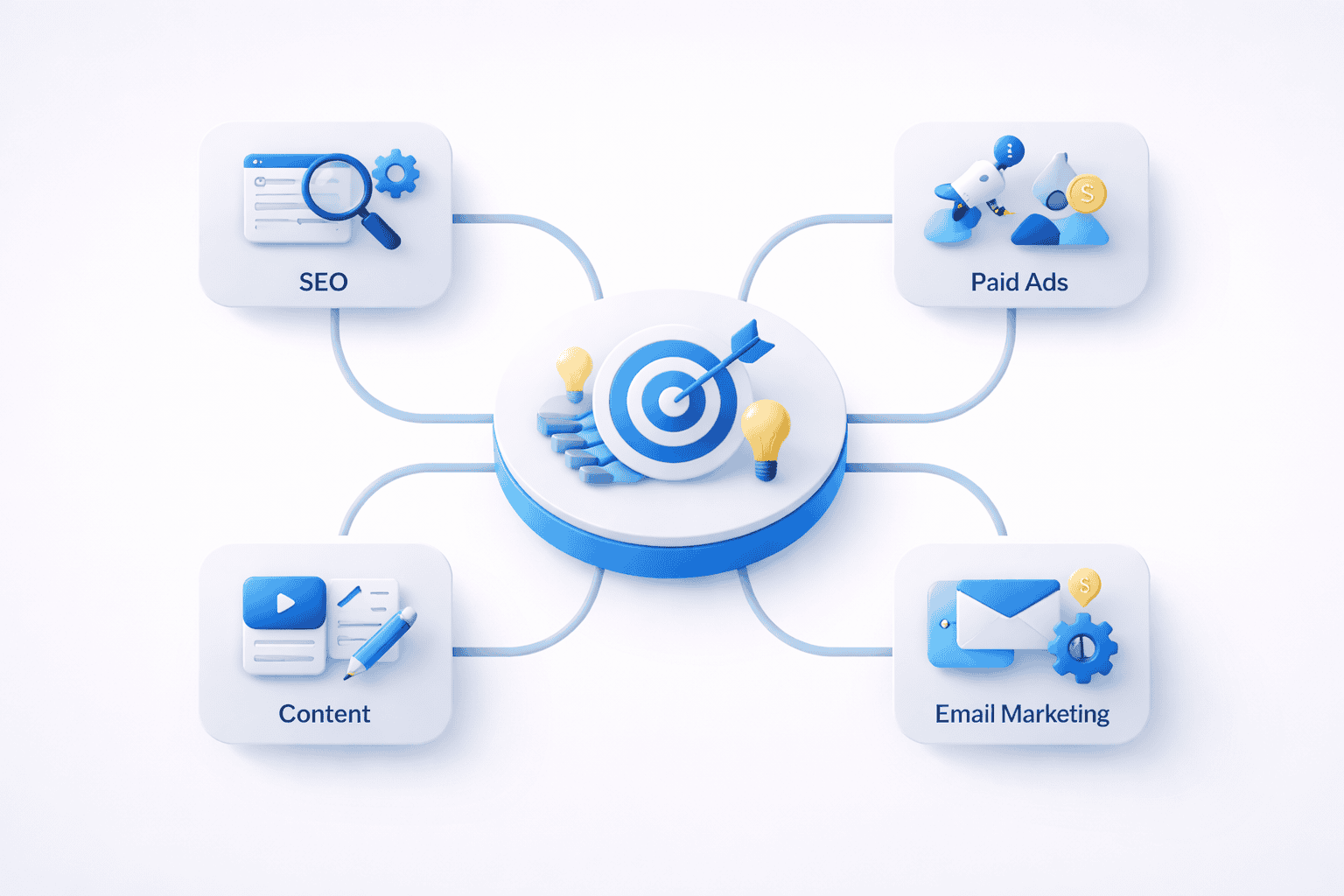
- Channel selection (SEO, paid ads, content, email, social)
- Budget allocation and timeline planning
- Conversion tracking and performance measurement

In most cases, the biggest reason a marketing plan for small business fails is not effort. It fails because actions are not sequenced through a clear funnel, and results are not measured with consistent tracking.
If you want to benchmark how professional teams structure planning and execution, you can also review this reference: digital marketing agency in Jordan .
Step 1: Define Clear Business Goals Before Building a marketing plan for small business
Before writing a single tactic inside your marketing plan for small business, you must define measurable business objectives. Marketing should support growth targets — not random activity.
Examples of strong marketing-aligned goals include:
- Increase qualified leads by 30% in 90 days
- Reduce customer acquisition cost by 15%
- Generate 100 monthly inquiries from digital channels
- Improve website conversion rate from 1% to 3%
Every marketing plan for small business execution must be tied to specific KPIs such as traffic growth, conversion rate, cost per lead, and revenue attribution.
Step 2: Define Your Target Audience and Customer Persona
A strong marketing plan must identify exactly who the ideal customer is. Without clarity here, messaging, channel selection, and budget allocation become guesswork.
Build a structured customer persona including:
- Demographics (age, location, income)
- Pain points and challenges
- Buying triggers
- Preferred marketing channels
- Decision-making timeline
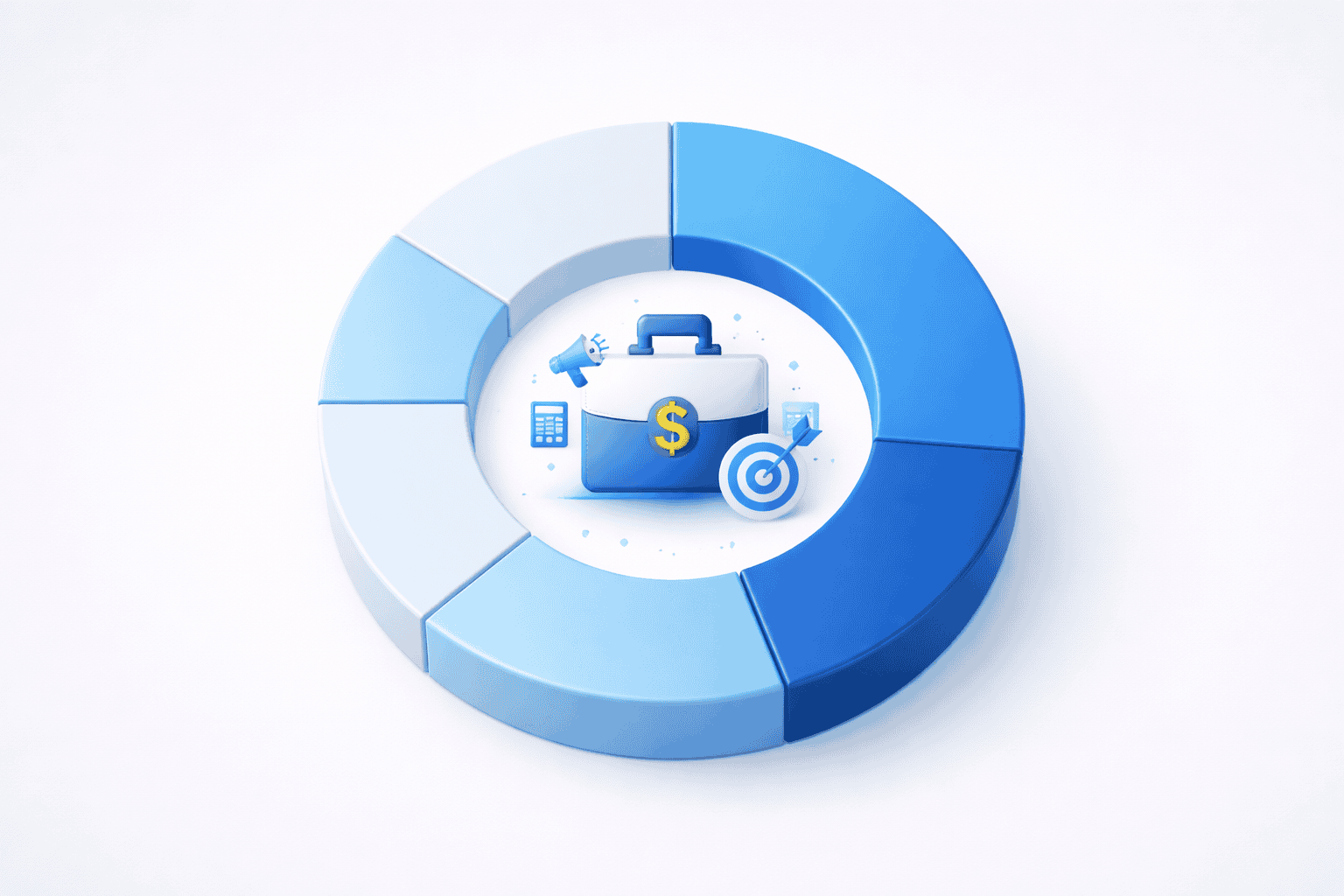
When your marketing plan for small business is built around a clearly defined persona, messaging becomes more precise, and lead quality improves significantly.
Step 3: Choose the Right Marketing Channels
Not every channel is suitable for every business. A structured marketing plan prioritizes channels based on audience behavior and ROI potential.
Common marketing channels include:
- Search Engine Optimization (SEO)
- Google Ads and paid search
- Content marketing
- Email marketing
- Social media advertising

Your small business marketing strategy should focus on 2–3 primary channels initially. Scaling too many channels at once often leads to diluted results.
Step 4: Build a Realistic Marketing Budget Plan
A marketing budget plan ensures financial discipline. Many small businesses overspend early without testing channel performance.
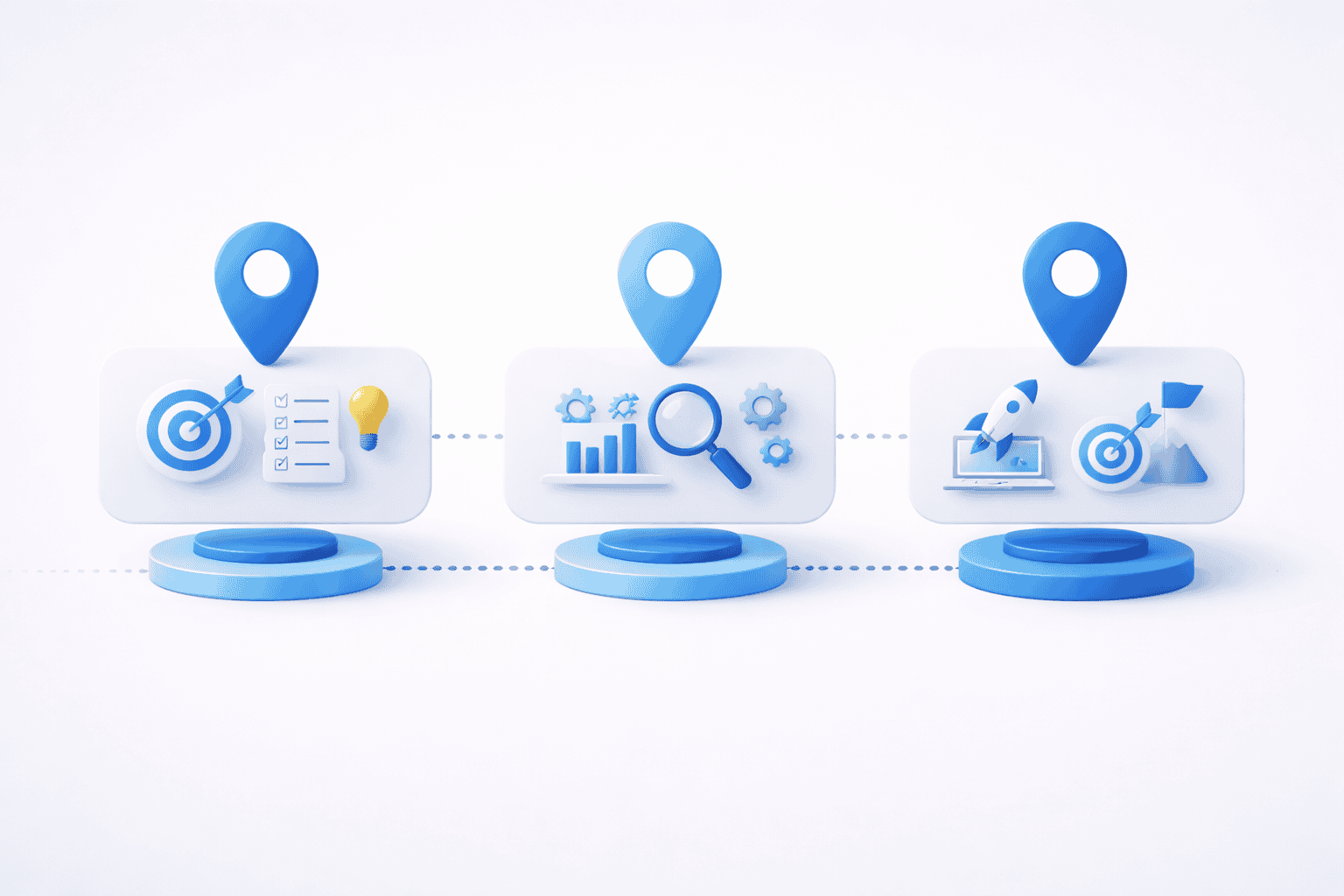
A balanced strategic marketing plan typically allocates: 40% to acquisition, 30% to optimization, 20% to content, and 10% to testing new channels.
Step 5: Create a 90-Day Action Roadmap
A practical marketing plan for small business should not stop at theory. It must translate into a 90-day execution roadmap. Without a timeline, strategies remain ideas.
A structured 90-day marketing rollout typically follows this pattern:
- Month 1: Setup, tracking, landing page optimization, initial campaigns
- Month 2: Optimization, content publishing, retargeting activation
- Month 3: Scaling winning campaigns and improving conversion rate
When structured properly, a strategic marketing plan becomes predictable. Instead of guessing results, you iterate based on data.
Competitor Analysis Before Execution
No marketing plan for small business should ignore competitor positioning. Understanding how competitors attract traffic, what keywords they rank for, and how they structure their offers provides a competitive advantage.
Use tools like SEMrush or Ahrefs to analyze:
- Top-performing competitor keywords
- Backlink profile strength
- Paid advertising presence
- Content depth and structure
Competitive awareness strengthens every marketing plan for small business by reducing blind spots.
Conversion Optimization: Turning Traffic Into Revenue
Many small businesses focus heavily on traffic generation, but a marketing plan for small business must prioritize conversions.
Improvements in conversion rate often deliver faster ROI than traffic growth.
- Clear value propositions
- Strong call-to-action placement
- Trust indicators (testimonials, certifications)
- Mobile-first design optimization
For structured support on strategy and execution, explore this detailed breakdown: digital marketing agency in Jordan .
Tracking and Performance Measurement
A data-driven small business marketing strategy requires proper tracking systems. Without measurement, optimization is impossible.
Essential tracking tools include:
- Google Analytics 4
- Google Search Console
- Conversion tracking setup
- CRM integration for lead quality analysis
For official documentation on measurement standards, refer to Google Search Console .
Common Mistakes in a small business marketing strategy
- Starting without defined KPIs
- Over-investing in branding without performance tracking
- Ignoring SEO as a long-term asset
- Stopping campaigns too early
- Failing to analyze performance data
Avoiding these errors dramatically increases the success probability of any marketing plan for small business.
Final Thoughts: Why Every small business marketing strategy Must Be Systematic
A successful marketing plan for small business is not built on trends. It is built on clarity, structure, measurement, and disciplined execution.
Small businesses that treat marketing as a system — rather than isolated campaigns — create predictable growth instead of random spikes.
If you approach your business growth marketing framework with: clear goals, defined personas, strategic channel selection, structured budgeting, and performance tracking — you dramatically increase your probability of sustainable growth.
Need expert guidance in building or optimizing your marketing strategy? Contact our team for a structured consultation.
What is a marketing plan for small business?
A marketing plan for small business is a structured document outlining goals, target audience, marketing channels, budget allocation, and tracking systems designed to generate measurable growth.
How long should a marketing plan for small business cover?
Most small businesses operate on a 90-day execution roadmap, with annual strategic planning and monthly performance reviews.
How much budget should a small business allocate to marketing?
Marketing budgets often range between 5% and 12% of total revenue, depending on growth goals and industry competitiveness.
What are the most important channels in a marketing plan for small business?
SEO, paid search advertising, content marketing, and email marketing are commonly prioritized due to measurable ROI and scalability.
Can a small business succeed without a formal marketing plan?
While short-term results may occur without planning, sustainable and predictable growth typically requires a structured marketing plan for small business execution.
How often should a marketing plan for small business be updated?
A marketing plan for small business should be reviewed monthly and adjusted quarterly based on performance data and market changes.